Can You Get A Right-Hand Hinged Washing Machine?
There are some things about kitchen and utility design that you just don’t clock until you’re standing in the room with a tape measure, working out where everything’s actually going to go. The direction a washing machine door opens is one of those things.
It’s one of those odd quirks you don’t really think about… until you’re really thinking about it, and slowly going a bit mad trying to work out why your lovely new utility cupboard suddenly doesn’t quite work.
In this post, I’ll walk you through why washing machines end up hinged the way they do, why it can cause headaches in a kitchen or utility layout, and what your actual options are if a right-hand hinge really matters to you.
In a hurry? Here’s my key takeaway:
🌀 Yes, right-hand hinged washing machines exist, but they’re rare. Miele is really the only mainstream option, so plan your layout around a left-hand hinge unless you’re specifically buying to get around it.
Read on to learn more…
You May Also Like
Can You Get A Microwave With Hinges On The Right-Hand Side?
Why Are Most Washing Machines Hinged On The Left?
I get asked this a lot, and honestly, the answer isn’t quite as exciting as you might hope. It mostly comes down to engineering, not handedness.
Front-loading washing machines have a door lock built into the appliance itself. Unlike a kitchen cabinet door, where you can simply unscrew the hinges and move them to the other side, a washing machine door has to latch securely into an electronic interlock while the machine is running. That interlock sits inside the machine on one side, and the hinge sits on the other.
Designing a machine where that arrangement could be flipped would mean different tooling, different wiring layouts, basically two versions of the same product. It’s just not something manufacturers have found worth doing. So almost every front-loader, across almost every major brand, comes with the door hinged on the left as standard.
💡 Pro tip: Don’t assume a washing machine’s hinge can be “swapped” by an installer, the way a fridge door sometimes can. On the vast majority of washing machines, it’s fixed at the factory and that’s that.
And by the way, most microwaves are hinged on the left too, with the door opening out to the right. This one really does come down to handedness. Most of us are right-handed, so a microwave that opens away to the right, leaving your right hand free to reach in and grab the plate, is the ergonomic default that’s stuck around for decades.
Can You Actually Get A Right-Hand Hinged Washing Machine?
Yes, but your options are limited.
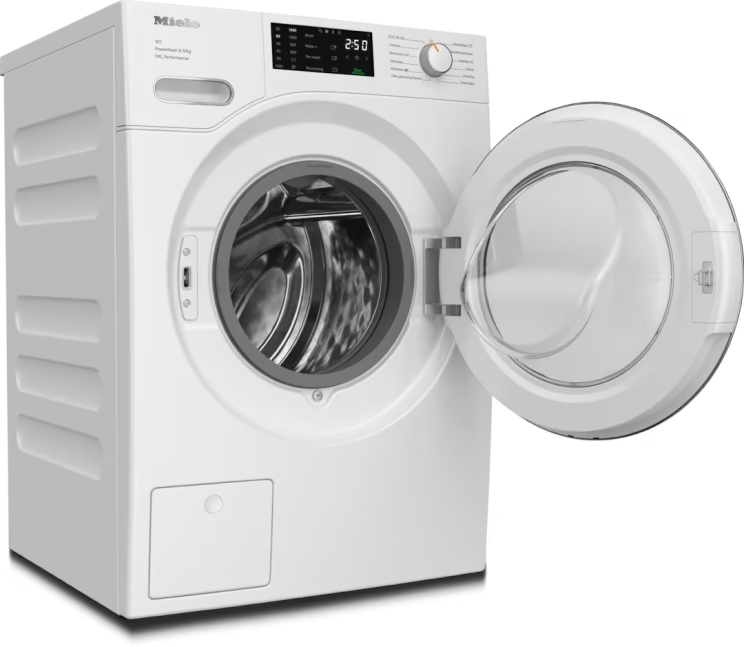
From what I’ve seen, Miele is really the standout here. Across their washing machine range, the door is hinged on the right as standard, which is the opposite of pretty much everyone else.
It’s not just a random design choice either. Miele also makes tumble dryers, and those are hinged on the left. So when you put a Miele washer and a Miele dryer side by side, both doors open outwards, away from each other, rather than clashing in the middle. It’s a genuinely clever bit of design thinking, and honestly, I quite like it.
The catch (sorry) is that Miele sit towards the premium end of the market, so if a right-hand hinge is the only reason you’re considering them, it’s worth weighing that up against your overall budget.
I’d always suggest double-checking the hinge direction on the specific model and at the retailer you’re buying from, too, as ranges do get updated and replaced over time.
Why This Can Be A Problem In Your Kitchen Or Utility Layout
So why does any of this actually matter? Let’s be honest, most of us don’t think about hinge direction until we’re standing in front of the machine trying to load a duvet and the door’s banging into a cupboard, a wall, or the dishwasher next to it.
Here’s where it tends to bite:
Tight Utility Cupboards: If your washing machine is tucked into a cupboard with a stud wall or another appliance immediately on one side, a door that opens “the wrong way” can end up only opening partway, making it awkward to load and unload.
Side-By-Side Washer And Dryer: If you’re planning a washer and dryer next to each other and don’t factor in the door hinging, you can end up with a lot of doors in your way. It’s not the end of the world, but it does mean working around an open door every time you move washing between the two.
Galley Or Narrow Kitchens: In a narrow utility area or galley layout, even a few extra centimetres of door swing can be the difference between a door that opens fully and one that catches on a worktop edge or the run of units opposite.
None of this is a disaster. But it’s the kind of thing that, if you spot it at the planning stage, takes two minutes to sort. If you spot it after the kitchen’s fitted… it’s a much bigger headache.

What Can You Do About It?
The good news is that, in my experience, this is almost always solvable with a bit of forward planning rather than buying a specific machine.
Position The Machine With The Door Swing In Mind: Before you finalise your layout, work out which way the door will open and check what’s on that side. If it’s open floor space, brilliant. If it’s a wall, a unit, or another appliance, it’s worth reconsidering the position.
Flip The Layout, Not The Machine: Sometimes the simplest fix is swapping which side of the run the washing machine sits on, or swapping the washer and dryer around, so the door swings into open space instead of into a cupboard.
Leave A Little Extra Clearance: If you can, allow a bit more space than the bare minimum on the side the door opens towards. It doesn’t need to be huge, but it makes loading and unloading far more comfortable, especially with bulky items like duvets or towels.
Consider A Right-Hand Hinged Model: If your layout genuinely can’t be adjusted and a left-hand hinge is going to cause a real problem, this is where it’s worth looking at Miele, or checking current ranges for any other brands offering it, as availability does shift over time.
💡 Designer tip: I always tell clients to nail down appliance positions, hinge direction included, before the cabinetry is ordered, not after. It’s a five-minute check that can save a lot of “can we just move that door” conversations later on.
You May Also Like
Appliance Placement In Kitchen Layouts
Final Thoughts
It’s a small detail in the grand scheme of a kitchen or utility room project, but it’s exactly the kind of small detail that causes big frustration if it gets missed.
My honest advice? Don’t go out of your way to hunt down a right-hand hinged washing machine unless your layout genuinely demands it. For most people, a left-hand hinge works perfectly well once the appliance is positioned sensibly.
But if you are working with a tricky layout, knowing this quirk exists (and that Miele is pretty much your only mainstream option for a right-hand hinge) means you can plan around it properly, rather than discovering it the hard way once everything’s plumbed in.
FAQs
Can a washing machine’s door hinge be changed from left to right?
On the vast majority of machines, no. The door lock mechanism is built into one side of the appliance, so reversing the hinge would mean redesigning the whole unit rather than just unscrewing a few hinges. If you need a right-hand hinge, it’s better to buy a model that comes that way from the factory.
Do tumble dryers have the same hinge problem?
Generally, dryer doors tend to be a bit more flexible than washing machine doors, partly because they don’t need the same kind of locking interlock. It’s still worth checking the specific model, but it’s less of a sticking point than it is for washing machines.
Does this matter for top-loading washing machines?
Not really. Top-loaders open upwards rather than outwards, so hinge direction isn’t an issue in the same way. They’re less common in UK kitchens and utility rooms, but if you’ve got the ceiling height (and don’t mind bending over to load), it’s worth bearing in mind as a workaround.
I’ve already chosen my washing machine, and it’s hinged the “wrong” way for my layout. What now?
Have a look at whether the layout itself can flex a little before you commit to anything else. Sometimes, swapping which side the washer sits on, or leaving a touch more clearance on the side the door opens towards, is enough to solve it without changing the appliance at all.
DISCOVER MORE
- Can You Get A Right-Hand Hinged Washing Machine?

- What Is A Built-In Combi Microwave Oven (And Is It Any Good?)
- Can You Fit A Dishwasher Under A Kitchen Sink? – (Maybe!)



Author

Michael is a kitchen designer from the UK. He's been designing and project managing new kitchen installations for over 10 years. Before that, he was an electrician and part of a team that fitted kitchens. He created Kitchinsider in early 2019 to help give people advice when it comes to getting a new kitchen.